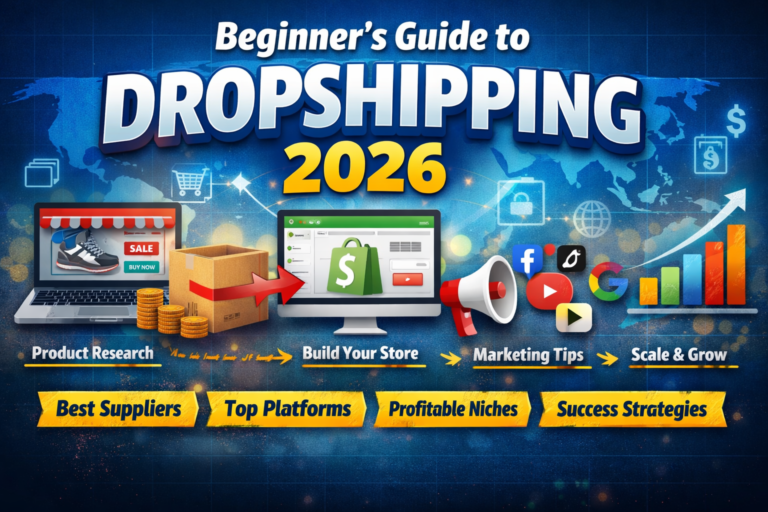
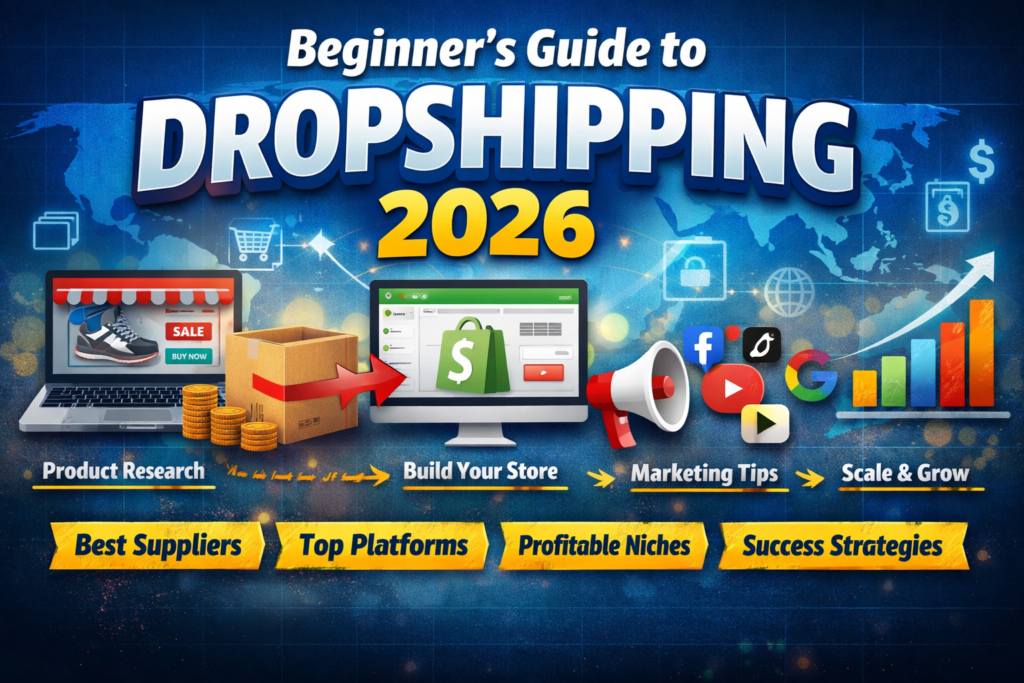
Dropshipping in 2026 is a bit like running a digital storefront without owning a warehouse. You focus on choosing products, marketing them, and serving customers, while suppliers handle storage and shipping. Sounds simple, right? It can be—if you understand how the system really works. This beginners guide to dropshipping 2026 explains everything in clear, simple language so you can decide whether this business model fits your goals.
What is dropshipping business model? Dropshipping means you sell products online without holding inventory. When a customer orders, your supplier ships directly to them. In 2026, dropshipping is more automated, faster, and competitive than ever—but also more opportunity-driven if done correctly.
2. How Dropshipping Works Step by Step
Dropshipping explained simply 2026:
Choose a niche
List products on your store
Customer places an order
Supplier ships the product
You keep the profit
That’s the core of dropshipping step by step for beginners.
3. Is Dropshipping Still Profitable in 2026
Yes—but not blindly. Is dropshipping still profitable in 2026? Profit now depends on branding, faster shipping, and smart marketing. The “copy-paste store” era is mostly gone. Think of it like fishing: better tools and strategy beat random casting.
4. Dropshipping Pros and Cons 2026
Pros
Low startup cost
No inventory risk
Flexible location
Cons
High competition
Supplier dependency
Thin margins if poorly priced
Understanding dropshipping myths vs reality helps avoid disappointment.
5. Best Dropshipping Platforms 2026
Shopify – beginner-friendly, all-in-one
WooCommerce – flexible and cost-effective
TikTok Shop – rising trend for viral products
Amazon – strict rules, limited branding
Each platform fits different goals and budgets.
6. Best Dropshipping Niches 2026
Winning stores focus on:
High profit dropshipping niches
Evergreen dropshipping products
Trending dropshipping products with demand
Avoid overly saturated gadgets unless you can brand differently.
Fulfillment services such as CJdropshipping vs Zendrop
Fast shipping and communication matter more than price.
8. Product Research for Dropshipping
Smart sellers use:
Dropshipping product validation methods
Spy tools for dropshipping 2026
Social media trend analysis
Always test before scaling.
9. Dropshipping Store Setup Guide
A conversion optimized dropshipping store includes:
Clean design
Clear product benefits
Trust badges and reviews
Theme choice and layout can double conversions.
10. Dropshipping Marketing for Beginners
Paid traffic includes:
Facebook ads
Google ads
Influencer marketing
Organic growth is slower—but cheaper long-term.
11. Dropshipping SEO Strategy 2026
SEO focuses on:
Blogging for dropshipping stores
Content marketing
Pinterest dropshipping traffic
This builds assets that compound over time.
12. Pricing, Payments & Profit Margins
Use psychological pricing and bundles. For payments:
PayPal dropshipping setup
Stripe alternatives
Cash on delivery in some regions
Aim for sustainable margins, not quick wins.
13. Shipping, Fulfillment & Customer Trust
Reduce refunds by:
Clear shipping times
Local dropshipping suppliers
Transparent policies
Trust is currency in 2026.
14. Legal Requirements & Automation
Dropshipping is legal in most countries, but you must handle:
Business registration
Taxes
Terms and conditions
Automation tools and AI tools for dropshipping 2026 save time and reduce errors.
15. Scaling Dropshipping Business
Scaling means:
Increasing ad budgets wisely
Building a brand
Moving from dropshipping to private label
This is where long-term profits live.
Conclusion
So, is dropshipping worth it in 2026? Yes—if treated like a real business, not a shortcut. With realistic expectations, smart tools, and consistent effort, dropshipping remains a powerful online income model.