Main Characters and Performances
Lee Marvin as Colonel Flynn
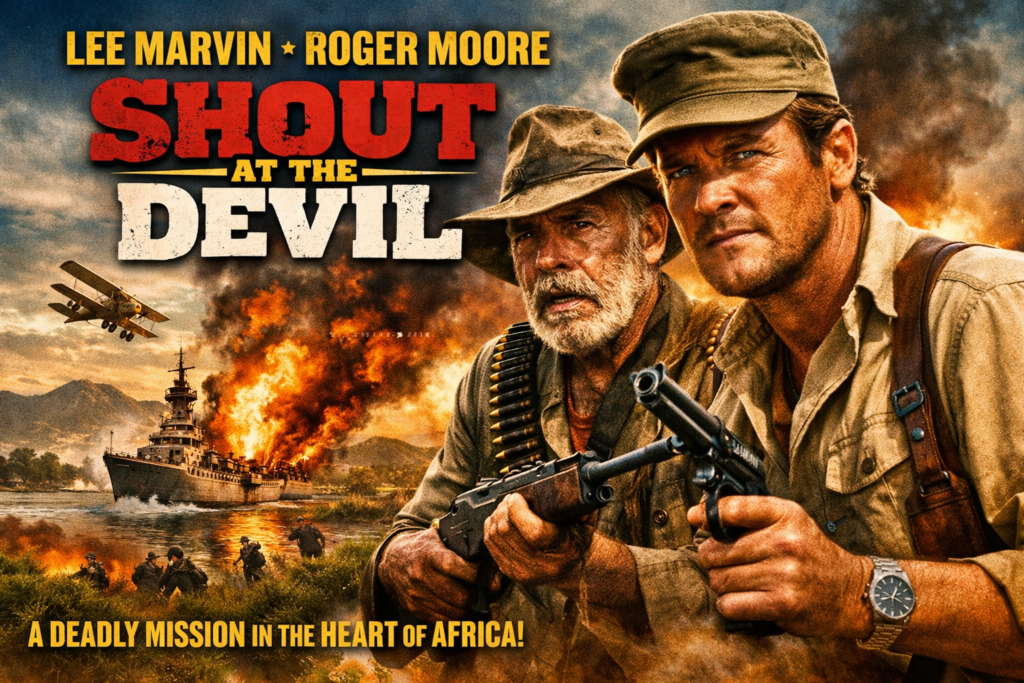
Lee Marvin delivers a gritty, grounded performance. His character feels worn down by war, carrying emotional scars that show in every glance and gesture.
Roger Moore as O’Flynn
Roger Moore plays against his polished Bond image here. He’s rougher, angrier, and more morally complex, proving his range as an actor.
Supporting Cast and Their Impact
The supporting characters, while not deeply explored, serve the story well and reinforce the dangerous, unstable world the protagonists inhabit.
Themes Explored in the Movie
War, Revenge, and Survival
This isn’t a heroic war story. It’s about survival and personal vendettas, showing how war strips people down to their core instincts.
Friendship Forged in Conflict
The bond between the two leads grows slowly, shaped by shared danger rather than trust. It feels earned, not forced.
Moral Ambiguity in Wartime
Nobody here is purely good or evil. The film embraces moral gray areas, which makes it feel surprisingly modern.
Cinematography and Visual Style
African Landscapes as a Character
The African wilderness isn’t just a backdrop—it’s an active force. Wide shots emphasize isolation, while harsh lighting reflects the brutality of the mission.
Practical Effects and Realism
Explosions, vehicles, and combat scenes rely on practical effects, giving the film a tangible sense of danger.
Direction and Storytelling
Peter R. Hunt’s Vision
Hunt keeps the story focused and tense. There’s little wasted time, and every scene pushes the mission forward.
Pacing and Narrative Flow
While some moments feel slow by modern standards, the pacing suits the story’s psychological weight.
Historical Context and Accuracy
WWII in Colonial Africa
The film shines by highlighting a lesser-known theater of World War II, expanding the viewer’s understanding of the global conflict.
Fiction vs Historical Reality
While not fully accurate, the film captures the chaos and uncertainty of wartime operations remarkably well.
Music and Sound Design
Jerry Goldsmith’s Score
Jerry Goldsmith’s soundtrack adds emotional depth, balancing tension with moments of quiet reflection.
Strengths of Shout at the Devil
What the Film Does Right
Weaknesses and Criticisms
Where the Film Falls Short
Audience Reception and Legacy
Box Office and Cult Status
While not a massive box office hit, the movie has earned cult status among classic war film fans.
Who Should Watch This Movie?
Ideal Audience Profile
If you enjoy classic war films, character-driven stories, or Roger Moore outside the Bond universe, this movie is for you.
Final Verdict
Is Shout at the Devil Worth Watching Today?
Absolutely. Shout at the Devil remains a powerful, atmospheric war adventure that rewards patient viewers with depth and authenticity.










cw777game’s got some interesting stuff. The game selection is fairly wide and there is something for everybody. Might give it a try especially if you like more niche games. cw777game