tv brands

Top 5 TV Brands — An In-Depth Expert Comparison

Top 5 TV Brands: LG, Samsung, Sony, TCL & Hisense Comparison

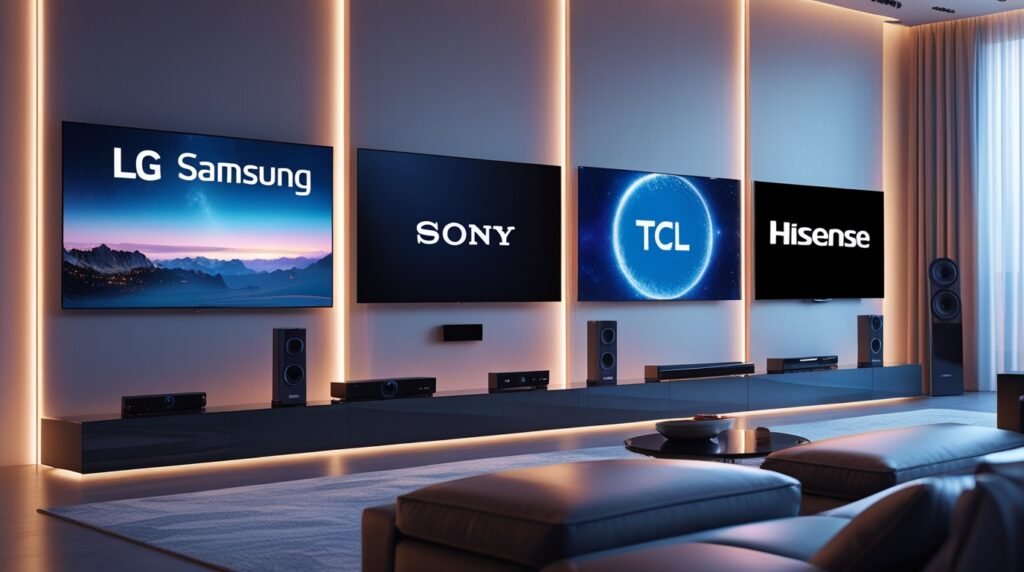
As global demand for high-performance home entertainment grows, choosing the right television brand becomes increasingly important. While many companies claim leadership, LG, Samsung, Sony, TCL, and Hisense consistently dominate worldwide charts in sales, innovation, and consumer satisfaction. Although “top” can vary depending on region and market segment, these five brands undeniably shape the modern TV landscape with their technological advancements and diverse price categories.
Below, we provide an extensive comparison designed to give readers a clear, fact-based view of what each manufacturer does best.

LG — The OLED Pioneer Setting Industry Standards

LG remains widely recognized for its groundbreaking contribution to OLED technology. Unlike LED TVs that require a backlight, LG’s OLED panels feature self-lit pixels, producing superior contrast, perfect blacks, and the most cinematic picture quality currently available.

Key Strengths of LG TVs

  • Exceptional Picture Accuracy: OLED displays deliver unmatched black levels and infinite contrast.
  • Wide Viewing Angles: No color washout from side angles — ideal for large living rooms.
  • Advanced Smart TV Platform (webOS): Clean, intuitive, and optimized for smooth navigation.
  • Strong Gaming Features: HDMI 2.1 support, low input lag, and G-Sync/FreeSync compatibility.

Best For

Home theater enthusiasts, gamers, and users looking for premium visual performance.

Potential Limitations

OLED panels may be more expensive than standard LED options, making LG better suited to premium buyers.

Samsung — The Market Leader in Innovation and Brightness

Samsung consistently holds the largest global TV market share, and this leadership is driven by their investment in QLED, Neo QLED, and MicroLED technologies. Unlike OLED, QLED displays rely on quantum dots to produce vibrant colors and impressive brightness, making Samsung TVs ideal for well-lit rooms.

Key Strengths of Samsung TVs

  • Exceptional Brightness & Color Volume: Perfect for daylight viewing.
  • Advanced Mini-LED Technology: Neo QLED models offer refined contrast and deep blacks.
  • Tizen Smart OS: A robust platform with strong app support.
  • Strong Design Language: Ultra-thin frames and elegant aesthetics.

Best For

Bright rooms, sports enthusiasts, and users who prefer vivid, dynamic images.

Potential Limitations

Black levels on QLED are excellent but still not as precise as OLED. Samsung also does not support Dolby Vision, which some users may miss.

Sony — Mastering Picture Processing and Realistic Color

Sony has a longstanding reputation for superior image processing, primarily due to its Cognitive Processor XR, which enhances clarity, motion handling, and color realism. Sony produces both OLED and Mini-LED models, allowing it to compete directly with LG and Samsung in premium categories.

Key Strengths of Sony TVs

  • Best-in-Class Motion Handling: Ideal for fast-moving content like sports and action scenes.
  • Highly Accurate Color Reproduction: Excellent for movies, streaming, and professional use.
  • Premium Sound Quality: Acoustic Surface Audio technology vibrates the entire screen.
  • Google TV Platform: Simple, feature-rich, and customizable.

Best For

Movie lovers, cinephiles, and viewers who prioritize accuracy and realism over extreme brightness.

Potential Limitations

Sony TVs often come with a higher price tag, especially in their OLED lineup.

TCL — The Value-Focused Innovator Offering High Quality at Lower Prices

TCL continues to rise rapidly in global rankings thanks to its combination of affordability and advanced features. With strong adoption of Mini-LED and QLED, TCL brings modern technology to budget-conscious households without compromising picture quality.

Key Strengths of TCL TVs

  • Competitive Pricing: Delivers high-end features at mid-range or budget prices.
  • Mini-LED Leadership: Early adoption puts TCL ahead of some competitors in affordability.
  • Solid Gaming Features: Variable refresh rate and low input lag on premium models.
  • Multiple Smart OS Options: Google TV and Roku TV available.

Best For

Families, budget buyers, and users seeking the best value-to-performance ratio.

Potential Limitations

Build quality and software responsiveness may not match premium brands like Samsung or Sony.

Hisense — Aggressive Performance for Budget-Friendly Buyers

Hisense has become one of the world’s fastest-growing TV brands, especially in Africa, Europe, and the Middle East. Known for competitive prices and impressive performance, Hisense often challenges TCL directly in the budget and mid-range markets.

Key Strengths of Hisense TVs

  • Excellent Price-Performance Ratio: Strong image quality for the cost.
  • ULED Technology: Hisense’s proprietary enhancement improves brightness and contrast.
  • Dolby Vision & Dolby Atmos Support: Strong feature set even on cheaper models.
  • Durable Build Quality: Reliable hardware at accessible prices.

Best For

Cost-conscious buyers, students, and secondary room setups like bedrooms or offices.

Potential Limitations

Hisense smart OS (VIDAA) may feel limited compared to Samsung Tizen or Google TV.

Comparing the Top 5 TV Brands Head-to-Head

Picture Quality

  • Best overall: LG OLED
  • Best brightness: Samsung Neo QLED
  • Best processing & realism: Sony

Gaming Performance

  • LG leads with full HDMI 2.1 support and OLED responsiveness
  • Samsung follows closely with excellent motion handling
  • TCL and Hisense offer strong budget gaming performance

Smart TV Platform

  • Sony: Google TV — feature-rich and intuitive
  • LG: webOS — smooth and well-organized
  • Samsung: Tizen — highly optimized
  • TCL/Hisense: Mixture of Google TV, Roku, and VIDAA

Price Range

  • Premium: LG, Sony, Samsung
  • Mid-range: Samsung, TCL, Hisense
  • Budget: TCL, Hisense

Final Verdict

Each brand excels in different categories, so the choice ultimately depends on consumer priorities:
  • Choose LG for the best cinematic experience.
  • Choose Samsung for bright rooms and vibrant visuals.
  • Choose Sony for the most natural color and motion handling.
  • Choose TCL for affordability with modern technology.
  • Choose Hisense for aggressive pricing and strong performance.
These five manufacturers continue to shape the global TV market, and understanding their strengths allows buyers to make informed decisions based on real performance—not just marketing claims.

Leave a Comment

Your email address will not be published. Required fields are marked *